Low FODMAP Diet: Best solution for Irritable Bowel Syndrome

Irritable Bowel Syndrome (IBS) is a condition that is characterized by gut symptoms including abdominal pain, intestinal gas/wind, bloating, and changed bowel habit (ranging from diarrhea to constipation). Symptoms can often be debilitating and lead to a reduced quality of life.

(FODMAP=Fermentable Oligo-Di-Monosaccharides and Polyols)
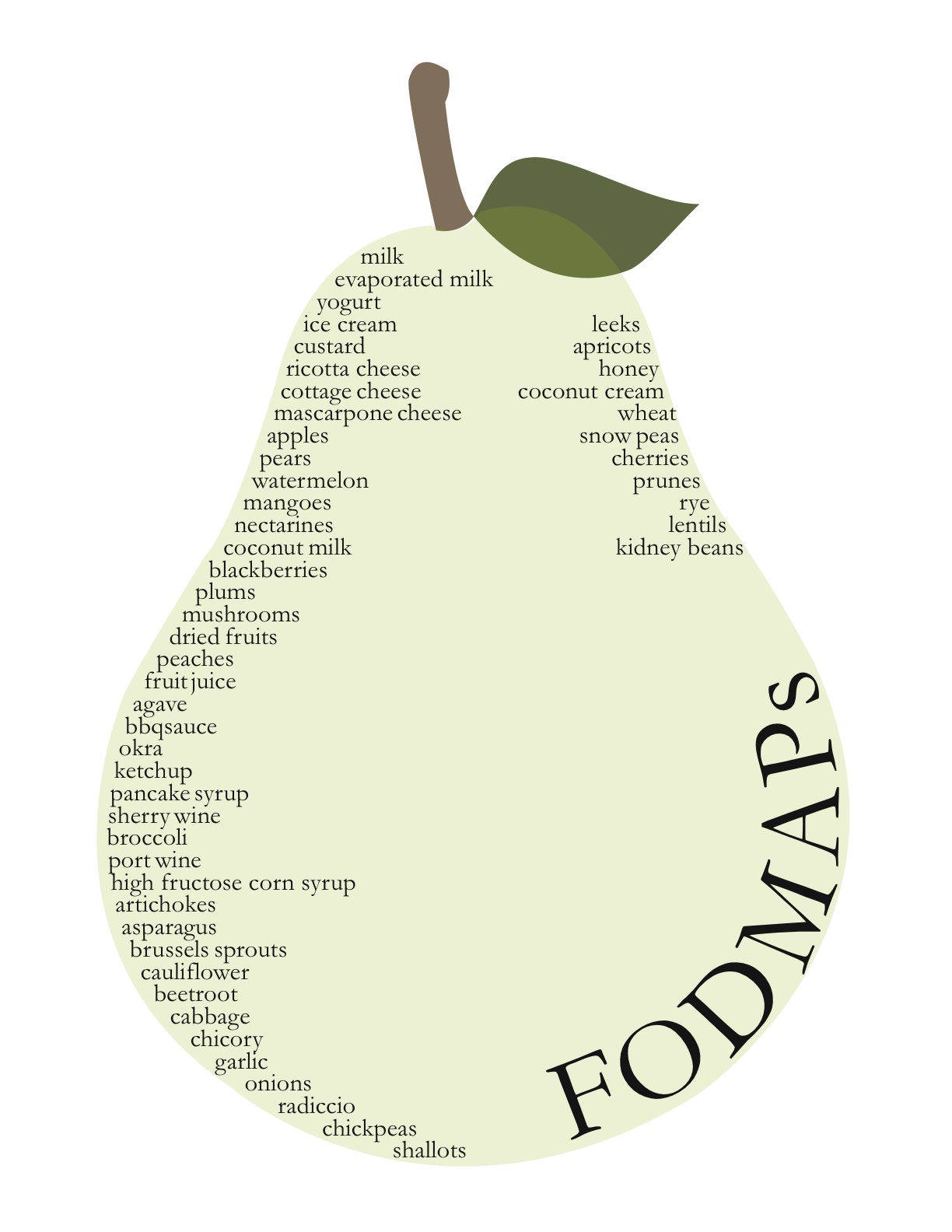
FODMAPs are carbohydrates (sugars) that are found in foods. Not all carbohydrates
are considered FODMAPs.
 

Common High FODMAP Foods

Fruits:
  • Apples
  • Apricots
  • Cherries
  • Mango
  • Pears
  • Nectarines
  • Peaches
  • Pears
  • Plums and prunes
  • Watermelon
  • High concentration of fructose from canned fruit, dried fruit or fruit juice
 

Grains
Level of FODMAPs is increased when these foods are eaten in large amounts:
  • Rye
  • Wheat
Lactose-Containing Foods
  • Custard
  • Ice cream
  • Margarine
  • Milk (cow, goat, sheep)
  • Soft cheese, including cottage cheese and ricotta
  • Yogurt
Legumes
  • Baked beans
  • Chickpeas
  • Lentils
  • Kidney beans
Sweeteners
  • Fructose
  • High fructose corn syrup
  • Isomalt
  • Maltitol
  • Mannitol
  • Sorbitol
  • Xylitol
Vegetables
  • Artichokes
  • Asparagus
  • Avocado
  • Beets
  • Broccoli
  • Brussels sprouts
  • Cabbage
  • Cauliflower
  • Corn
  • Garlic (with large consumption)
  • Fennel
  • Leeks
  • Mushrooms
  • Okra
  • Onions
  • Peas
  • Radicchio lettuce
  • Scallions (white parts)
  • Shallots
  • Sugar snap peas
  • Snow peas

Common Low FODMAP Foods

 
Fruits
  • Banana
  • Blueberry
  • Grapes
  • Honeydew melon
  • Kiwi
  • Lemon
  • Lime
  • Mandarine oranges
  • Orange
  • Raspberry
  • Strawberry
Sweeteners
  • Artificial sweeteners that do not end in -ol
  • Glucose
  • Maple syrup
  • Sugar (sucrose)
Lactose Alternatives
  • Butter
  • Hard cheese, brie and camembert
  • Lactose-free products, such as lactose-free ice cream and yogurt
  • Gelato
  • Rice milk
  • Arugula
  • Bok choy
  • Carrots
  • Celery
  • Eggplant
  • Green beans
  • Lettuce
  • Parsnip
  • Scallions (green parts only)
  • Sweet potato
  • Tomato
Grains
  • Oats
  • Gluten-free products
  • Spelt products
 
The FODMAPs in the diet are:
  •  Fructose (fruits, honey, high fructose corn syrup (HFCS), etc)
  •  Lactose (dairy)
  •  Fructans (wheat, onion, garlic, etc)(fructans are also known as inulin)
  •  Galactans (beans, lentils, legumes such as soy, etc)
  •  Polyols (sweeteners containing sorbitol, mannitol, xylitol, maltitol, stone fruits such as avocado, apricots, cherries, nectarines, peaches, plums, etc)

FODMAPs are osmotic (means they pull water into the intestinal tract), may not be 
digested or absorbed well and could be fermented upon by bacteria in the intestinal 
tract when eaten in excess. 

Symptoms of gas, bloating, cramping and/or diarrhea may occur in those who could be 
sensitive to the effects of FODMAPs. A low FODMAP diet may help reduce symptoms, 
which will limit foods high in fructose, lactose, fructans, galactans and polyols. 

Tips for a low FODMAP diet:
Follow the diet for 6 weeks. After this, add high FODMAP foods one at a time back into the diet in small amounts to identify foods that could be “triggers” to your symptoms. Limit foods that trigger your symptoms.
Read food labels. Avoid foods made with high FODMAPs such as high FODMAP fruits, HFCS, honey, inulin, wheat, soy, etc. However, a food could be an overall low FODMAP food if a high FODMAP food listed as the last ingredient.
Buy gluten free grains as they are wheat free. However, you do not need to follow a 100% gluten free diet as the focus is on FODMAPs, not gluten. Look for gluten free grains made with low FODMAPs, such as potato, quinoa, rice or corn.
Avoid gluten free grains made with high FODMAPs.
Limit serving sizes for low FODMAP fruits/vegetables and high fiber/low
FODMAP foods such as quinoa to a ½ cup per meal (½ cup=size of a tennis ball) if you have symptoms after eating these foods. The symptoms could be related to eating large amounts of low FODMAPs or fiber all at once.
 
Low FODMAP Meals and Snack Ideas
1. gluten free waffle with walnuts, blueberries, maple syrup without HFCS
2. eggs scrambled with spinach, bell peppers and cheddar cheese
3. oatmeal topped with sliced banana, almonds and brown sugar
4. fruit smoothie blended with lactose free vanilla yogurt and strawberries
5. rice pasta with chicken, tomatoes, spinach topped with pesto sauce
6. chicken salad mixed with chicken, lettuce, bell peppers, cucumbers, tomatoes, balsamic vinegar salad dressing
7. turkey wrap with gluten free tortilla, sliced turkey, lettuce, tomato, slice of cheddar cheese slice, mayonnaise, mustard
8. ham and swiss cheese sandwich on gluten free bread, with mayonnaise, mustard
9. quesadilla with corn or gluten free tortilla and cheddar cheese
10. beef and vegetable stew (made with homemade broth, beef, allowed vegetables)

केले के फायदे [Benefit of Banana]

केले में पोटैशियम पाया जाता है, जो कि ब्लड प्रेशर के मरीज के लिए बहुत फायदेमंद है।

केले का शेक पेट को ठंडक पहुंचाता है। केले में काफी मात्रा में फाइबर पाया जाता है।

केला पाचन क्रिया को सुचारु करता है। अल्सर के मरीजों के लिए केले का सेवन फायदेमंद होता है।

केले में आयरन भरपूर मात्रा में होता है, जिसके कारण खून में हीमोग्लोबिन की मात्रा बढ़ती है।

तनाव कम करने में :
केले में ट्राइप्टोफान नामक एमिनो एसिड होता है जिससे मूड को रिलैक्स होता है।

दिल के लिए :
दिल के मरीजों के लिए केला बहुत फायदेमंद होता है। हर रोज दो केले को शहद में डालकर खाने से दिल मजबूत होता है और दिल की बीमारियां नहीं होती हैं।

नकसीर के लिए :अगर नाक से खून निकलने की समस्या है तो केले को चीनी मिले दूध के साथ एक सप्ताह तक इस्तेमाल कीजिए। नकसीर का रोग समाप्त हो जाएगा।

वजन बढ़ाने के लिए :
वजन बढ़ाने के लिए केला बहुत मददगार होता है। हर रोज केले का शेक पीने से पतले लोग मोटे हो सकते हैं। इसलिए पतले लोगों को वजन बढाने के लिए केले का सेवन करना चाहिए।

बच्चों के लिए :
बच्चों के विकास के लिए केला बहुत फायदेमंद होता है। केले में मिनरल और विटामिन पाया जाता है
जिसका सेवन करने से बच्चों का विकास अच्छे से होता है। इसलिए बच्चों की डाइट में केले को जरूर शमिल करना चाहिए।

बुजुर्गों के लिए फायदेमंद :
केला बुजुर्गों के लिए सबसे अच्छा फल है। क्योंकि इसे बहुत ही आसानी से छीलकर खाया जा सकता है। इसमें विटामिन-सी, बी6 और फाइबर होता है जो बढ़ती उम्र में जरूरी होता है। बुजुर्गों में पेट के विकार को भी यह समाप्त करता है।

Food combinations bad for digestion

Five faulty food combinations – 

* Animal protein and carbohydrates: Different enzymes are required to breakdown these very different foods. When eaten together, the foods do not get properly digested. That leads to indigestion, fermentation and putrefaction in the digestive tract.

* Fruit with carbohydrates: Fruit digests much more quickly than any other food. Many people think that adding fruit to porridge is a healthy breakfast option. However, it will only hinder the digestive process. It’s better to always eat fruit on an empty stomach and ideally early in the morning.


* Dairy with fruit: Smoothies are a breakfast favourite for many people. The problem is that yogurt is an animal protein and when mixed with fruit, it can cause inadequate digestion which leads to acidity, and fermentation in the GI tract.


* Avoid drinking with meals: It’s best to avoid drinking large amounts of any fluid with meals, otherwise the digestive enzymes will become diluted and hinder the digestive process. It’s best to stop drinking 30 minutes before food intake and wait two hours after eating before drinking water, to ensure adequate digestion.


* Melon after dinner for a healthy dessert: Melon is the one fruit that must be eaten alone, or left alone, as it takes slightly longer than other fruits to digest.


Five useful food combinations – 

* Carbohydrates and vegetables such as brown rice and vegetables.

* Animal protein and non-starchy vegetables make for easy digestion, which will enhance one’s ability to breakdown the nutrients and eliminate efficiently. Prawns on a bed of green leaves with cucumber and fennel or grilled fish with lightly steamed green beans.

* Bowl of seasonal fruit salad first thing in the morning. This is a gentle way to wake up the system.

* Avocados combine well with either vegetables or fruits. This semi tropical fruit also works well in green smoothies and makes a great dairy replacement.

* Aim to ingest denser proteins, especially animal-based ones earlier in the day to ensure adequate digestion. 
 

शहद सेवन करने के नियम

शहद कभी खराब नहीं होता . यह पका पकाया भोजन है और तुरंत ऊर्जा देने वाला है |


शहद लेते समय कुछ सावधानियां बरतनी चाहिए |

– अमरुद , गाना , अंगूर और खट्टे फलों के साथ शहद अमृत के सामान है |

– चाय कॉफ़ी के साथ शहद ज़हर के सामान है |

– शहद को आग पर कभी ना तपाये |

– मांस -मछली के साथ शहद का सेवन ज़हर के सामान है |

– शहद में पानी या दूध बराबर मात्रा में हानि कारक है |


– चीनी के साथ शहद मिलाना अमृत मेंज़हर मिलाने के सामान है |

– एक साथ अधिक मात्रा में शहद लेनासेहत के लिए नुकसानदायक हो सकता है .दिन में २ या ३ बार एक चम्मच शहद लें |

– घी , तेल , मक्खन में शहद ज़हर के सामान है |

– शहद खाने से कोई परेशानी महसूस हो तो निम्बू का सेवन करें |

– समान मात्रा में घी और शहद ज़हर होता है |

– अलग अलग वृक्षों पर लगे छत्तों में प्राप्त शहद के अलग अलग औषधीय गुण होंगे . जैसे नीम पर लगा शहद आँखों के लिए , जामुन का डायबिटीज़ और सहजन का ह्रदय , वात और रक्तचाप के लिए अच्छा होता है |

– शीतकाल या बसंतऋतु में विकसित वनस्पति के रस में से बना हुआ शहद उत्तम होता है और गरमी या बरसात में एकत्रित किया हुआ शहद इतना अच्छा नही होता है। गांव या नगर में मुहल्लों में बने हुए शहद के छत्तों की तुलना में वनों में बनें हुए छत्तों का शहद अधिक उत्तम माना जाता है।

– शहद पैदा करनें वाली मधुमक्खियों के भेद के अनुसार वनस्पतियों की विविधता केकारण शहद के गुण, स्वाद और रंग मेंअंतर पड़ता है।

– शहद सेवन करने के बाद गरम पानी भी नहीं पीना चाहिए।

– मोटापा दूर करने के लिए गुनगुने पानी में और दुबलापन दूर करने के लिए गुनगुने दूध के साथ ले |

– अधिक धुप में शहद ना दे . गरमी से पीड़ित व्यक्ति को गरम ऋतु में दिया हुआ शहद जहर की तरह कार्य करता है।

– शहद को जिस चीज के साथ लिया जाये उसी तरह के असर शहद में दिखाई देते है। जैसे गर्म चीज के साथ लें तो- गर्म प्रभाव और ठंडी चीज के साथ लेने से ठंडा असर दिखाई देता है। इसलिए मौसम के अनुसार वस्तुएं शहद के साथ ले |

– ज्यादा मात्रा में शहद का सेवन करने से ज्यादा हानि होती है। इससे पेट में आमातिसार रोग पैदा हो जाता है और ज्यादा कष्ट देता है। इसका इलाज ज्यादा कठिन है। फिर भी यदि शहद के सेवन से कोई कठिनाई हो तो 1 ग्राम धनिया का चूर्ण सेवन करके ऊपर से बीस ग्राम अनार का सिरका पी लेना चाहिए।
-बच्चे बीस से पच्चीस ग्राम और बड़े चालीस से पचास ग्राम से अधिक शहद एक बार में न सेवन करें। लम्बे समय तक
अधिक मात्रा में शहद का सेवन न करें।

– चढ़ते हुए बुखार में दूध, घी, शहद का सेवन जहर के तरह है।

-यदि किसी व्यक्ति ने जहर या विषाक्त पदार्थ का सेवन कर लिया हो उसे शहद खिलाने से जहर का प्रकोप एक-दम बढ़कर मौत तक हो सकती है।

Ayurveda For Improving Eyesight

There are various methods in Ayurveda to improve eyesight. If proper care for eye is not take, it can result into various eye conditions such as age related macular degeneration and cataracts, which is a leading cause of blindness in the world.

The Ayurvedic name for defective eyesight is ‘Drishti Dosha’. Alochaka Pitta is responsible for maintaining eyesight and it weakens with age. Proper caring for the eyes is one preventative measure that helps.
11

Causes of Defective Eyesite: –
Prolonged constipation and nervous debility can cause Drishti dosha. Common cold can also lead to eyesight defects.Stress , Diabetes, Excessive smoking, alcohol intake,caffienated drinks are also responsible for defective eyesight .


1

Ayurvedic Diet for improving Eyesight:
– Consuming good amount of apple and grapes helps in improving your eyesight.
– Carrots have good quantity of vitamin A which proves to be one of the useful natural treatment for enhancing your eyesight.
– Cucumber juice does wonders for your eyesight as it tries to improve it immensely.
– Addition of spinach in your diet is beneficial.It purifies your blood, increases the hemoglobin and improves your eyesight.
– Turnip, fresh milk, cheese, butter, tomatoes, lettuce, cabbage, soya beans, green peas, oranges and dates are good source of vitamin A include them in your diet.
– Almond is ideal for eyes; it strengthens the vision, and calm mental stress. Take 1-2 t. a day with warm milk or sweet orange juice.
– You can mix some cardamom seeds with 1 tablespoon of honey. Eat daily.
– Consuming blueberry juice also considered to be very useful for your eyes.

Ayurvedic Herbs for improving Eyesight:


3

Amla – Extract the juice of fresh amla and drink 20 ml twice daily.
Asparagus – Mix 1 teaspoon of powdered asparagus in half teaspoon of honey. Take the mixture twice daily with warm cow’s milk.
Bhringraj – When Bhringraj herb or amla herb oil or paste is applied over eyes, they help in improving eye vision.
Black pepper- Black pepper powder should be mixed with honey o improve eyesight.
Ghee – Rub a small amount of ghee on soles of the feet to improve eye vision.
Garlic – The juice extracted from fresh garlic is used for regaining lost eyesight.
Rose petals – Freshly extracted juice of properly cleaned rose petals, which can be used both internally and externally for improving eye vision.
Liquorice – Take approximately half to 1 teaspoon of liquorice powder with cow’s milk twice daily. This powder can also be mixed with ghee or honey.
Triphala – Triphala is an important medicine for eye health, especially blurred vision or to prevent the development of cataract.

Exercises for Eyesight Improvement:


4

— Close both the eyes very tightly by shutting the lids firmly. Open them suddenly which allows you to feel the stretch. Once open arch your brows and stretch your face. Repeat this several times a day.
— Look as far as possible and inhale then look down as far as possible and exhale. Blink your eyes more than dozen times. Do the same procedure by turning to your left and right then diagonally up to left, down to right, up to right and down to left followed by rapid blinking.
— Rotate your eyes in all the directions. Slowly and steadily concentrate one eye at a time. Do this exercise more than dozen times and try doing this with your eyes shut.
— By using palming which can be stated as a revised version of the thousand-year-old yoga tradition known was Hatha Yoga. It relieves strain and stress from your mind and eyes which needs the required break. For this you have to warm your hands by rubbing them together vigorously. Once it’s warm cover the eye without touching the eyelids. This relaxes the nerves and helps in blood circulation.
— You can also try sunning which means to use sun’s light for your eyes. Move your head from side to side for the heat to benefit the eyes. After a while try stretching the eyes to allow more sunlight to your eyes. Directly looking at the sun is never good. It is great method to reduce light sensitivity.
— Perform Netra Basti which is bathing your eyes with clarified butter to reduce eye strain and to improve eyesight.

Avoid Instant Noodles

1. Nutrient Absorption : Noodles inhibit the absorption of nutrients for the children under 5.

2. Cancer Causing : The ingredient in the instant noodles called “Styrofoam’, Which is a cancer causing agent.

3. Miscarriage : Women who are Eating instant noodles during their pregnancy causes miscarriage, because it affect the development of a fetus.

4. Junk Food : instant noodles are enriched with full of carbohydrates, but no vitamins, fiber and minerals. This makes the instant noodles considered as a junk food.

5. Sodium : Instant noodles are power packed with high amounts of sodium. Excess consumption of sodium leads to heart disease, stroke, hypertension and kidney damage.

6. MSG : Monosodium Glutamate is used to enhance the flavour of instant noodles. People who are allergic to MSG consume it as part of their diet, then they end up suffering from headaches, facial flushing, pain, burning sensations.

7. Overweight : Eating Noodles is the leading cause of obesity. Noodles contains fat & large amounts of sodium, which causes water retention in the body and surely it leads to overweight.

8. Digestion : Instant noodles are bad for digestive system. Regular consumption of instant noodles causes irregular bowl movements and bloating.

9. Propylene Glycol : The ingredient in the instant noodles called “Propylene Glycol” which has a anti-freeze property. This ingredient is used because it prevents the noodles from drying by retaining moisture. It weakens the immune system of our body. It is easily absorbed by the body and it accumulates in the kidneys, heart and liver. It causes abnormalities and damage to those areas.

10. Metabolism : Regular consumption of instant noodles affect the body’s metabolism, because of the chemical substances like additives, coloring and preservatives inside the noodles.

Health benefits of eating Tomatoes

1- Helps to keep blood vessels healthy

2- Rich in lycopene to promote prostate health
3- Full of vitamin C to keep immune system strong
4- A good source of beta-carotene for healthy vision

5- Studies have shown tomatoes help prevent breast cancer.
6- Contains compounds to help lower cholesterol

7- Rich in potassium for heart health
8- Full of vitamin E to keep skin healthy and beautiful
9- The skin is full of carotenoids tomatoes to promote wellness
10- Rich in energizing B vitamins to help you stay active

HEALTH BENEFITS OF MUSIC

1. Heightens Awareness: Musical (non-verbal) and verbal interaction with others, enhances awareness of self and others.

2. Share Feelings: Offers opportunities for individuals to openly share their feelings and to experience a sense of ‘universality’.

3. Improves Self Belief: Music allows everyone to express themselves creatively without the need to follow any strict guidelines, processes or norms.

4. Skill Development: Plays an important role in the development of physical, sensory and cognitive skills, extending your visual perception.

5. Improves Focus: Music helps improve your concentration and attention span.

6. Motivation Booster: Increases self-confidence, self-esteem, personal insight and motivation.


7. Sense of Independence: Leads to development of independent, decision-making skills.

8. Improves Quality of Life: Provides immense satisfaction, enjoyment and an overall improvement in quality of life.

9. Creates Relaxed Environment: Provides a relaxed environment that enables better social interactions.

10. Anti depressant: Music calms the nerves and decreases tension, anxiety and stress. Your heart loves it.

11. Sharpens Motor Skills: Musicians have more evolved gross and fine motor skills.

12. Improves Memory: Musicians have sharper sequential memory and shorter recall time.

13. Improves Discipline: Trains the mind towards self-management and inculcates discipline.

14. Amps up happiness levels: Deeply engaging with music, rather than allowing it to wash over us, gives the experience enhanced emotional power and happiness.


15. Rehabilitation: Music therapy is widely used for patients with visual, sensory or motor disabilities, induced through stroke.

16. Effective Learning Aid: The inherent structure and emotional pull of music makes it an easy tool for teaching concepts, ideas, and information.

17. Shortens Recall Time: Music is second only to smell for its ability to stimulate our memory in a very powerful way. Music therapists use this while working with patients suffering from dementia and amnesia.

18. Easy Storage: Music, with its rhythmic patterns is easy for the brain to store and recall: predictable, structured, and organized–and our brain just loves it that way!

Symptoms not to be ignored

1. Constant coughing. If you’ve recently had flu, a cough will linger for a few days or even a few weeks. But if you have a cough which has moved in lock, stock and barrel, it’s time to get to the doctor. It could be one of several things, from tuberculosis, a chest infection and lung cancer, to name but a few.

2. Rectal bleeding. If your stools are dark in colour and you become aware of the fact that you regularly bleed from the anus, make that appointment. It could be any of a number of things, from benign (bleeding piles) to serious (colon cancer), but don’t take any chances.

3. Blinding headaches. Everyone gets headaches from time to time, but if you start missing work regularly and live on painkillers, the time for action has come. It could be as simple as getting different glasses, changing your diet/lifestyle, or it could be more serious. Best to get to the truth as soon as possible.

4. Vision problems. Everyone’s vision deteriorates somewhat with age, but if your vision becomes blurry overnight, or changes in any other noticeable way, see an optician and a neurologist. It may be something insignificant, but it may also be serious.

5. Fever. If your temperature fluctuates between high and normal for no discernable reason, find out what’s wrong. If you run a fever for more than 3 days, visit your doctor.

6. Ongoing diarrhoea. Whether the result of food poisoning or a virus, diarrhoea is dangerous. And the longer it continues, the more dangerous it becomes, as it dehydrates you. If you regularly get diarrhoea, or if it carries on for more than two or three days, see the doctor. If your baby has diarrhoea, don’t waste a day before you see your doctor/nurse.

7. Chest pains. This could be as innocent as heartburn, but it could also signal that your heart is in trouble. If chest discomfort is accompanied by pains in your left arm, don’t bother with the GP – get straight to the hospital’s emergency room. You could be having a heart attack.

8. Night sweats. Sweating at night is not normal – it is often a symptom of tuberculosis, Aids or Hodgkin’s disease, which is a lymphatic cancer. Do something about it.

9. Genital sores. These are usually a symptom of a sexually transmitted disease. They should not be ignored, as this disease can be passed on to others, regardless of what it might be doing to you.

10. Menstrual problems or paralysis. A menstrual period that lasts more than ten days, or doesn’t arrive at all, should not be ignored. Non-arrival could mean you’re pregnant, or have fibroids or cysts on your ovaries. A period that overstays its welcome could mean many different things – point is, you should get to gynaecologist.

11. New moles. Most people have moles somewhere on their bodies. If a mole changes its colour, shape or size, it could be turning nasty. Watch out for new moles. It will not go away by itself and if left untreated, can ultimately become life-threatening.

12. Sudden muscle weakness. If you suddenly find you have difficulty standing, walking, balancing or that muscles that were fine the day before have become weak and useless, get it checked out. It could be, among other things, Parkinson’s disease or you may even have had a mild stroke. And yes, young people can have strokes too.

13. Breathing difficulties. Sudden onset of breathing difficulties could signify many things – from asthma, to an allergic reaction, to name but two. It should be remembered that untreated asthma can kill. Breathing problems can quickly become life-threatening. Don’t ignore it.

14. Constant urination. Everyone urinates a few times per day, but when you start getting up three or four times during the night to go to the toilet, something is wrong. It could be prostate problems or the onset of Type 2 diabetes or a bladder infection.

15. Bumps and lumps. Whether we’re talking swollen glands or lumps under the skin, these should never be ignored. Better be safe than sorry. It may be something benign like a mild infection or a pimple or boil, but then again, it may not. Do something about it.

16. Chronic exhaustion. Between working nine-to-five and keeping the family going, most people are tired, and not surprisingly. But when you suddenly feel as if getting out of bed in the morning is a major undertaking, something could be wrong. It may be depression, or the exhaustion could be a symptom of other ailments.

17. Loss of interest in life. If you or family members suspect you may be depressed, why suffer unnecessarily? We are no longer in the fourteenth century and depression can be treated. Most people who commit suicide suffer from depression. Up those serotonin levels before you get to these levels of desperation.